Maria Samba, a 49 year-old immigrant from Ecuador, makes a living by selling flavored ices in the summer and hot dogs in the winter. Like many other undocumented immigrants, Samba couldn’t apply for street vending licenses and often has to pay fines for illegal vending.
So when she heard that the city has passed a law allowing undocumented immigrants to apply for street vending licenses, she wanted to be involved.
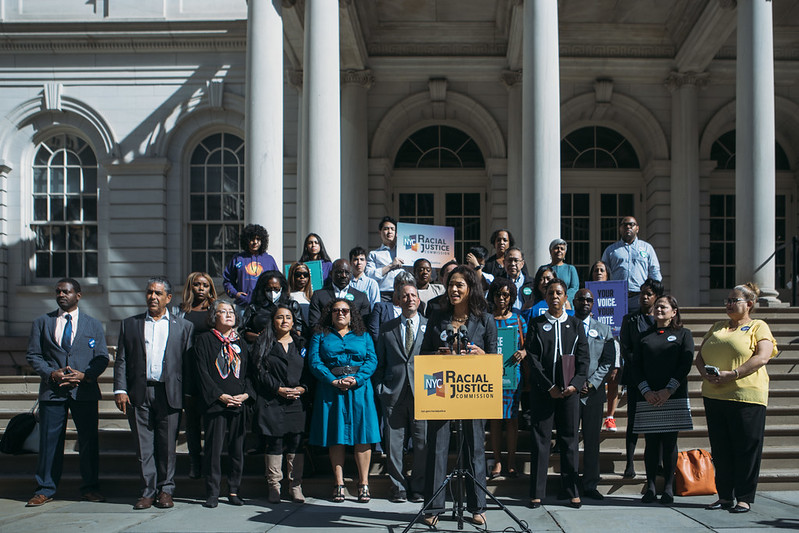
That is why she was in City Hall last month holding one of the pens that Mayor Michael Bloomberg used to sign into law a legislation that would prohibit the Department of Consumer Affairs from questioning applicants for street vending licenses about their immigration status.
“I won what I wanted,” she said in Spanish through an interpreter, joining many other vendors at the step of City Hall. “I won my dream.”
“We’re all very happy,” Flor Bermudez, staff attorney for Esperanza del Barrio, a group that works with Mexican and Latino immigrants, told Daily News. “The city will no longer discriminate against immigrants in the licensing process.”
In the past, the Department of Consumer Affairs required that applicants had to have proper work authorization or permanent resident cards (green cards) in order to apply for licenses.
When Mayor Bloomberg issued Executive Order 41 in 2003 prohibiting city agencies from inquiring or disclosing immigration status of New Yorkers who come into contact with city government, street vending was the last permit that still used immigration status as a criterion for certification.
The new law will help bring the vending law inline with the executive order, Bloomberg said.
The bill, sponsored by Councilmember Charles Barron was passed in the city council in June with little but vocal opposition.
“It’s a continuation of the city moving in the wrong direction,” Republican Councilmember James Oddo told the New York Sun. “This is the Last permit that allowed the city to ask the immigration status. Instead of removing it, I think we should be asking the status when we hand out all of our permits.”
Some argued that allowing more people to apply for vending licenses would put small stores in jeopardy. “We have people selling fruit on the street in front of a fruit stand that cost less because they have lower overhead cost,” said Richard Lipsky from The Neighborhood Retail Alliance, an umbrella group advocating the rights of small businesses “That’s not acceptable”
However, there are a limited number of street vending licenses. “The general merchandise vending licenses have been kept at 853 ever since 1970s,” said Dena Improta, of the Department of Consumer Affairs. Two other types of licenses are for pushcart food vending permit, capped at 3,000, and seasonal food permit at 1,000.
Still small business are concerned about their future. “What happened here is that they used the over inflated sympathy for undocumented immigrants to help the campaign to increase the number of street vending licenses in the future,” said Lipsky.
Indeed, a bill to increase the number of licenses for street vending is about to get a hearing in the city council.
An immigrant from Bangkok, Thailand, Chaleampon Ritthichai is the editor of The Citizen.Â