Will Cuomo Draw the Line on Gerrymandering?
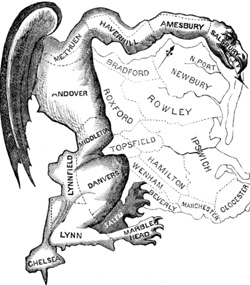
Elkanah Tisdale (1771-1835)
This 1812 cartoon of legislative districts in Massachusetts shows the original gerrymander -- a division of the state aimed at boosting the fortunes of Gov. Elbridge Gerry and the Democrats.
On Nov. 2, voters in California and Florida approved measures on the ballot to take the politics out of drawing legislative district lines.
In New York, the voters do not have the power to go to the ballot to change the redistricting process. That leaves it up to Gov.-elect Andrew Cuomo and the State Legislature to decide whether to keep redistricting in the hands of legislators or enact reforms to create a more independent process. With the state receiving census data from the federal government by April 1, 2011, and new districts needing to be drawn before the 2012 legislative elections, the clock is ticking on this important issue.
Cuomo and a majority of members of the legislature have expressed their support for change. But whether that will become a reality in time for the upcoming redistricting remains to be seen, along with how the governor, legislators and advocates will draw independent lines.
Gerrymandering in New York
Line drawing, known as redistricting, occurs every 10 years after the completion of the U.S. Census to ensure that the all citizens are equally represented across congressional, state legislative and local council districts. The next round is slated to begin in 2011.
When legislators draw their own lines -- as is the case in New York -- it often becomes inherently political. Known as "gerrymandering," lines are configured in the best interests of the elected officials who draw them. (The term "gerrymander" was from a district formed in Massachusetts under Gov. Elbridge Gerry, which resembled a salamander, hence "gerry-mander.")

To avoid this, California recently formed a citizen redistricting commission, made up entirely of members of the public. In New York, the majority party in each house of the state legislature appoints the members of the Legislative Task Force on Demographic Research and Reapportionment or "LATFOR," which draws the maps. In addition to drawing their own lines through LATFOR, the leadership also draws lines for New York's congressional districts. The political decisions made by line-drawers can split natural communities, create oddly shaped districts and reconfigure lines to put potential challengers out of districts, sometimes by only a block or two.
The task force's maps must be approved by the legislature and the governor, although the last two governors signed the plan into law with little input.
In 2011-2012, , the Democrats will draw lines for the Assembly, and the Republicans will draw lines for the Senate as was the case in the last three redistricting cycles. From 1975 to 2008, Republicans controlled the Senate and Democrats controlled the Assembly in what was the longest standing partisan split in state legislatures across the country.
This in no small part was due to the way district lines are drawn. Some also blame the state's redistricting process for the dysfunction in Albany. Though it has been criticized for decades by good government groups, editorial boards and those elected officials or challengers who have been disadvantaged by gerrymandering, New York has kept its redistricting process.
Now observers think the time could be ripe for change, with public confidence in state government at an all-time low. Many candidates promised redistricting reform during their campaigns for office this year -- including Andrew Cuomo.
Cuomo's Stance
Cuomo's campaign policy book, the New NY Agenda, prominently featured redistricting reform. Its three-page entry (as long as the entry for education) favors the creation of an independent commission. Cuomo cites growing support for reform proposals, including legislation sponsored by Assemblymember Michael Gianaris and Sen. David Valesky that creates an independent commission.
As far as the specifics, Cuomo states that an independent commission must be "diverse in every sense of that word," and not motivated by self-interest, as is the case when legislators draw their own district maps. Cuomo alludes to criteria for drawing the lines, stating that the commission would be driven by the values of population equality, contiguity, compactness, minority representation, and preservation of communities of interest and pre-existing administrative boundaries.
Working with the Legislature
For redistricting reform to become a reality, it must have support from members of the legislature -- the very people who have benefited from the current configuration of lines. In the last year, however, the legislature has begun to take steps in support of redistricting reform and the creation of an independent commission. In 2010, two Senate committees -- elections and government operation -- passed the Valesky/Gianaris legislation. The Assembly Governmental Operations Committee passed the bill as well. The Senate is set to hold hearings on redistricting, at which Democratic Sen. Martin Dilan, the current Senate co-chair of LATFOR, will preside. These will focus primarily on the criteria used for drawing the lines (of course Dilan will not hold this post next year, when Senate Republicans take back the majority).
During the campaign season, NY Uprising, a group formed by former Mayor Ed Koch in conjunction with Citizens Union (the sister arm of Citizens Union Foundation, which publishes Gotham Gazette), asked candidates to pledge their support for an independent redistricting commission. A majority of the incoming legislators signed on, backing strict criteria for drawing lines like those in the Valesky/Gianaris legislation. NY Uprising has secured the pledges of over three-quarters of senators, including 31 of the 32 incoming Republican senators with Dean Skelos, the Republican leader, among them. In addition, incoming Republican Sen. Mark Grisanti from Buffalo, who did not sign the pledge, states on his campaign website that he aims to "establish a nonpartisan citizens apportionment commission."
NY Uprising also has secured the pledges of 22 of 30 incoming Democrats in the Senate, and two additional Democratic senators are already co-sponsors of the Valesky legislation, yet did not sign the pledge.
The Assembly also appears to have a majority in support of an independent commission, including a majority of the Democratic conference. Though Assembly Speaker Sheldon Silver has not signed the pledge, he has indicated publicly a willingness to consider a change to the process. While most Assembly Democrats did not sign the NY Uprising pledge, many of those members are co-sponsors of the Valesky/Gianaris legislation. Taken together, those who support the bill or signed the pledge make up a firm majority of the Democratic conference. When adding the Republican support in the Assembly, over two-thirds of members support the creation of an independent redistricting commission.
Silver stated in September that he will not "stand in the way of redistricting reform." Koch has subsequently met with Silver and said he believes Silver is moving closer to supporting reform.
Democratic Assemblymember Hakeem Jeffries, who has been a strong supporter of an independent redistricting commission (and was infamously drawn out of the district held by then-incumbent Assemblymember Roger Green in 2002 by a couple blocks), believes that Cuomo will have the speaker's ear on reform.
"Speaker Silver has expressed openness to considering the issue of redistricting reform, which should permit Gov.-elect Cuomo to jumpstart a meaningful dialogue with the Democratic conference in the Assembly on this issue," said Jeffries. "It will be important for him to approach reform with a firm but sensitive hand, understanding that this is an issue that some members view as a matter of political life or death."
Others, including NY Uprising, are also confident that there will be sufficient support from the legislature. "Gov. Cuomo will certainly have opposers to reform, but we are confident that he will mount an effective campaign to pass redistricting reform. … It is no easy fight, but it will succeed," said Mark Botnick, a spokesperson for NY Uprising.
Keeping the Campaign Promises
Pledges, of course, are not action. Koch has said he will use a <a-href="http://nymag.com/news/intelligencer/encounter/66467/">strategy of shamingmembers who do not keep their promises by going into their districts and letting their constituents know they are "liars." Cuomo seems likely to a take a softer approach, given the pushback that former Gov. Eliot Spitzer received when he threatened to go into the home districts of legislators. Cuomo, after all, will need to work with the legislature on a number of issues if he hopes to fulfill his campaign promise to turn the state around.
Given that many feel there will be change of some kind in the redistricting process, it remains to be seen how independent a new commission will be and how strict the guidelines will be for drawing districts. Should the legislature create a commission not seen as independent enough, members of the Senate and Assembly risk criticism from those who have long opposed the current process, and potentially the governor.
Cuomo has stated that he would veto any redistricting plan that "reflects partisan gerrymandering." Some feel that will serve as a kind of insurance policy to push the legislature to act in 2011.
"There will be legislation calling for an independent commission, because Cuomo has stated that he will veto the lines if there is not. The state must face these issues with the 2012 election approaching," said Botnick. "Albany is looked down upon by governments across the country. Legislators want to change that perception and become leaders."
The State Budget as a Distraction
Given the enormous budget challenges facing Cuomo as he enters office on January 1, 2011, there has been some <http://nymag.com/news/intelligencer/69382/>speculationthat redistricting reform could be used as a bargaining chip in the fight to change the state's costly pension system.
Jeffries, however, does not believe that redistricting reform will be sacrificed for the budget. "Once the budget is complete, the legislature should turn to redistricting reform as a matter of priority. I don’t think the issue should be linked to the budget and don't expect that it will," he said.
Should the budget be passed on time, the legislature will have the remaining months of the session to deliberate on redistricting reform. They then could enact a bill before they go home for the summer.
Rachael Fauss is research and policy manager for Citizens Union Foundation, which publishes Gotham Gazette.
the state's new divorce laws take effect

Photo by Daniel Lobo
For better, for worse, richer, or poorer, New York has joined the other 49 states in enacting no-fault divorce, effective last month. The only basis for divorce now is "irretrievable breakdown of the marriage" for at least six months.
While the new Domestic Relations law provides no definition of "irretrievable breakdown," in the Uniform Marriage & Divorce Act, it meant "No reasonable prospect of reconciliation." To avoid the possibility of one spouse obtaining a divorce -- or even remarrying -- before the couple's economic relationship is determined, the new law says, "No judgment of divorce shall be granted ... unless and until the economic issues of equitable distribution of marital property, the payment or waiver of spousal support, the payment of child support, the payment of counsel and experts' fees and expenses as well as the custody and visitation with the infant children of the marriage have been resolved by the parties, or determined by the court and incorporated into the judgment of divorce."
The Real Issues
As contemporary realities have increasingly made fault obsolete, most divorce cases have come to be about money, property and children and not about who is legally at fault. It is uncommon for one spouse to attempt to hold the other hostage in a failed marriage, though it sometimes happens. New York State had already taken fault out of the equationin determining monetary and property issues. Other than in a few exceptional cases, there was little harm to a defendant who was accused of, say, adultery or abandonment.
Under the old divorce law, fault was often fabricated and testimony perjured, usually with the knowledge of all concerned. Either the husband or the wife would take the witness stand and swear that the other party wrongfully refused to have "marital relations," left the marital home, or acted in a cruel manner, which constituted unhealthy and unsafe behavior when described in some detail. The defendant would have an opportunity to contest the charges, but typically did not because he or she also wanted the divorce, or at least did not want to contest it. Occasionally one spouse resisted divorce and might even be successful in showing that the fault allegations were untrue, or couldn't be proved, and the marriage would go on.
Until the 1970s, the only basis for divorce in New York was adultery. Then came fault grounds that included adultery, but also cruelty, abandonment, a separation agreement (filed with the county clerk, initially for two years and later reduced to one year), court ordered separation and, finally, imprisonment of one spouse for three years or more. One of those had to be proved. When adultery was the only possibility, one spouse might leave the state, relocate to Nevada for six weeks to establish residence and obtain a divorce there. Others went to Mexico, Haiti or the Dominican Republic for "quickie divorces," which New York had to recognize. Or private investigators, armed with cameras, would catch the unfaithful partner in a hotel room with someone other than the spouse. Now, it's goodbye to all that.
As the issue has been debated in the legislature and elsewhere over the past several years, many women and women's organizations opposed no fault divorce. They theorized that if a husband could get an immediate divorce and even remarry, the wife would lose out financially. To prevent that under the old system, judges had generally preferred not to sign off on the divorce until support and equitable distribution were decided. Those opposed to no-fault were successful until this year.
Many lawyers and judges agree that, since the decision to award the divorce is such a small part of the overall proceedings compared to the economic issues, taking the grounds for fault out of the picture will not significantly affect legal billing and other costs of divorce. Other divorce lawyers, however, supported the change in law even though they said it would reduce their income.
One major change, though, could allow lawyers' fees to rise. There is now a presumption, though it can be contested, that fees for lawyers and experts shall be paid by the richer spouse in order to insure that the parties are adequately represented. This is expected to be of great help to wives who do not have the money to pay retainer fees and on-going legal bills.
Gaps in the Law
Lawyers and judges who have studied the new laws, which apply only in Supreme Court, which has exclusive jurisdiction over divorce, and not in Family Court, all seem to agree that the legislature will have to revisit the new statutes.
To take another example, what if one party wants to avoid divorce because selling the marital home in the current economy would be unwise? There does not appear to be a way to prevent the divorce.
Problems are anticipated in the new laws surrounding spousal maintenance. As to provisions regarding the support of the non-monied spouse and dependent children, specific formulas have been enacted for spousal support (still often referred to by some as alimony). Previously a judge determined these amounts. Now, the statute distinguishes between a payor (the monied spouse) earning less than $500,000 a year, and those above "the cap." In New York City, particularly in Manhattan, that is not so unusual an income.
Where the payor's income is under $500,000, the mathematical formula for temporary support at the commencement of an action is the lesser of 30 percent of the payor's income minus 20% of the payee's income, or 40 percent of the sum of the two incomes minus the payee's income.
While everybody is subject to the same formulas, any amounts over $500,000 are distributed by the judge applying more subjective factors. They could include transference of property to keep it out of eequitable distribution, future earning capacity of the parties, need for further education and access to health insurance. Also, the judge may consider the existence and duration of a pre-marital joint household -- a factor that will be interesting because it gives weight to the idea that there is life before marriage, when the issue being dealt with is about life after marriage.
The factors for the court to consider in deviating from the mathematical formula are slightly different in cases involving less than $500,000 and those going above the cap. But among the nearly 20 factors are present and future earning capacity, need for education or training, standard of living, wasteful dissipation of marital assets, medical insurance, tax consequences.
If the income of the payor (usually the high-income husband) is based on salary, documented by a W-2 form, then the number is a known factor. Under both the old and new law the problem arises when income and assets can be easily hidden by the spouse who is self-employed or in a cash business. The court may consider factors outside the mathematics of the formula, for example, imputed income, where the monied spouse says he earns X, but the court concludes that with two Escalades in the driveway, he is clearly earning more than he is disclosing.
The statute calls for a worksheet to calculate the percentage of income the more affluent spouse will pay to the other. No one knows, in figuring the percentage of income to be paid, whether the spousal maintenance should be subtracted from gross income first or the child support. The law offers no guidance as to whether subtractions are to be made from gross income to child support first, off the top, to arrive at the amount of support to the spouse or if is it the other way around.
Another problem the lawyers see is that the formulas are used to set temporary award, not in calculating "final" or so-called permanent awards, which are not really permanent. Yet at the initial stage -- before discovery -- the judge will not know the couples true income and other circumstances. The temporary awards could become permanent even though they were based on inadequate information.
"It won't work. Most decisions are not going to apply the formula; in practice it will rarely be applied" for higher income people, said Anne Peyton Bryant, an attorney in the office of Raoul Felder and Partners, P.C./ "Motions for temporary maintenance for high income people will be decided more on the basis of exceptions than the rules or the mathematical formulas If income is below the cap, the formula will work for them."
As for child support, the court can review the amount previously ordered when there has been a change in either parent's income of 15 income up or down, or support was last reviewed three or more years before. It would appear that other significant changes in circumstances could be brought before a judge. Custody remains unchanged and is still governed by the best interests of the child.
There is much disagreement about how much will actually change under the new divorce law and how it will all work, but that won't be known until decisions start coming out of the courts.
Emily Jane Goodman is a New York State Supreme Court justice
Divisions in District Dominate Brooklyn Assembly Race

Photo by how_long_it_takes
In his long-shot effort to unseat Assemblymember Joseph Lentol, Andre Soleil charges Lentol has neglected the problems facing residents of the Walt Whitman houses and other poorer parts of the Brooklyn district.
After 38 years in the State Assembly, Joseph Lentol is running for the office once again. And his only challenger in the Democratic primary, Pentecostal minister and attorney Andre Soleil, believes it is time for a change. Voters in the district "haven't had a choice since 1985," said Soleil, who faces the slim odds of beating a long-time incumbent in this year's race.
Lentol, though, believes he has earned the chance to remain in Albany and represent the 50th Assembly district. Throughout the years, he said, he has worked to improve Brooklyn's waterfront, advocated for tenants' rights and sought to pass legislation addressing environmental issues in the district, such as the bill to close RADIAC, a radioactive waste site located next to a public school.
In Brooklyn's 50th Assembly district, the issues are as varied as the population. To the north, the candidates have weighed in on key issues in Williamsburg and Greenpoint such as the newly passed extension of the 1982 Loft Law and the planned Domino housing project along the waterfront.

Soleil has accused the Assembly member of neglecting social issues in the southern part of the district, which includes Fort Greene and Clinton Hill. Soleil claims that Lentol has not paid sufficient attention to the city police department's stop-and-frisk policy and that the high rate of HIV/AIDS cases in those areas has not been properly dealt with.
Lentol disputes Soleil's claims and said he remains confident of his relationship with his constituents.
Whichever man wins will face Republican/Conservative Jacqueline Haro in November.
On the Waterfront
Lentol and Soleil differ over the plans to convert the abandoned Domino Sugar refinery on Kent Avenue in Williamsburg to a residential development.
The Assembly member opposes the project, arguing it will overtax essential neighborhood services including schools, public transportation, the local police precinct and the fire department. "What many don't know," Lentol said, "is that the city already closed "The People's Firehouse" serving the area, although the population has increased in recent years.
Lentol agrees with the developer, Community Preservation Corp.'s setting aside of 30 percent of the apartments as affordable housing. "We like the affordable housing. I like the fact that they did some sort of compromise, but I would like to see the project scaled down" more than it already has been, he said.
Soleil supports the project as it is. "For these development projects, I would certainly support developers who make agreements with the surrounding community," he said. "That's exactly the kind of housing project that I think needs to be encouraged throughout the city."
Soleil does not believe that the project will put too much stress on the waterfront area. If it does, for example, strain the transit system, he said, the community should "lean on the MTA to increase the frequency of trains. It would be incumbent upon the state to use the additional property taxes to make that possible."
A 'Lofty' Proposal
On June 21, Gov. David Paterson signed an extension to the 1982 Loft Law, which protects residents of illegally converted loft apartments by requiring landlords to modify the buildings to meet safety standards. Loft tenants, many of whom live in Williamsburg and the surrounding neighborhoods, will have the same rent stabilization protections that other residents of the city currently enjoy.
Those who oppose the law have charged that landlords will pass the cost of increasing safety standards onto the tenants. The Bloomberg administration has criticized the law, saying that it will hurt manufacturing.
Lentol, who sponsored the bill, believes that an increase in rent would be worth it. "In the long run, it would be beneficial to somebody who's renting their apartment. We want the building to be brought up to code, even if it's a struggle," he said.
Soleil also supports the measure. Responding to the mayor's concerns for industry, he said, "The residential use is something that is better for us at this time. Our city needs to be able to adapt to the changing economy." He added, "the manufacturing systems have gone to New Jersey."
Stop, Question, and Frisk
In his campaign, Soleil has focused on the southern part of the district, including Fort Greene, The candidate, who is black, accuses Lentol, who is white, of "largely ignoring the black and Latino population" in the area. He has criticized the Assembly member for not having an office in the southern part of the district and claims that he rarely sees him at community events.
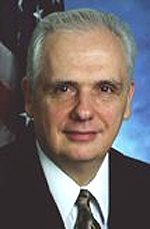
Joseph Lentol was first elected to the State Assembly from North Brooklyn in 1972 and said he has developed a strong relationship with his constituents in the years since.
"That's not surprising to me," retorted Lentol, "because I've never seen him in Fort Greene or Clinton Hill." Lentol asserted that over the years he has been to many community meetings. "Ask the people of the district if I'm in touch with the community. I'm confident in my relationship with my constituents, he said.
To bolster his argument, Soleil pointed to the police department's use of the stop-and-frisk, particularly in Fort Greene's Walt Whitman and Ingersoll housing projects. "Stop-and-frisk is a way of life" in Fort Greene, the candidate said, much as it in Bronwnsville. As a lawyer, Soleil said, he has defended a number of people who have never been arrested and who have been brutalized for "looking suspicious."
Lentol has not done enough to address the issue, Soleil claims. "Developments for low-income tenants should not be treated as concentration camps."
On July 16 Paterson signed into law the bill limiting the records the police could keep on such stops. Lentol says that he "has been a passionate supporter of that bill and was a key player in passing it and getting it through the committee," although he is not officially listed as a sponsor. Using stop-and-frisk, he said "to keep lists on people that haven't done anything is just insane."
Health Problems
Soleil also charged that Lentol has neglected the health needs of some in the district. "Fort Greene is a hotbed of HIV infection," said Soleil. He attributes this in part to the many Fort Greene residents who, he said, end up in the in the criminal justice system.
Andre Soleil has loaned his campaign $25,000, indicating, he said, that he is willing to put his money where his mouth is.
According to government sources, the state of New York has the most HIV-positive inmates in the country. About 97 percent of incarcerated individuals will be released and once again live in their communities.
Hepatitis C infection rates have become problematic in recent years as well. In 2007, for instance, 16 percent of incoming female inmates and 11 percent of new male inmates tested positive for the disease. Lentol's office has funded needle exchange program in an effort to fight this problem in the area.
Soleil recalls defending a man who contracted Hepatitis C and B after going to prison in 1976 and was neither told of nor treated for the diseases. If elected, Soleil said, he would hope to craft legislation requiring the Department of Corrections to test inmates for such diseases and then treat them if necessary.
Lentol says he "helped shepherd out of committee and voted for a bill that gave the Department of Health oversight in matters related to healthcare in the state's Department of Corrections. According to a press release, the legislation "authorizes [the health department] to conduct annual reviews of HIV and hepatitis C care in state and local correctional facilities, to mandate necessary changes, and to publicly release annual reports on correctional care."
By many accounts, Lentol's office has worked with various AIDS organizations including the Brooklyn AIDS Task Force and NYC AIDS Housing Network, and has supported a needle-exchange program with V.O.C.A.L.
Money and Support
Lentol said he has yet to ask for endorsements in his campaign. He currently has $273,322 on hand.
For his part, Soleil said, "We have not received endorsements and nor are we seeking them. We will be making 80,000 contacts in our district over the summer, and we're looking to win."
Outside Income by Member
Council members serving in 2009 brought in at least $533,000 in outside income.
Below are all current council members' income disclosure for 2009 -- a quarter of them were not serving at the council last year.
These figures do not include assets (like the market value of securities or real estate).
|
*Members that just joined in January 2010.
**David Greenfield joined the council in March 2010. He was not a candidate in 2009.
The District is Brooklyn Heights, But Albany is the Issue
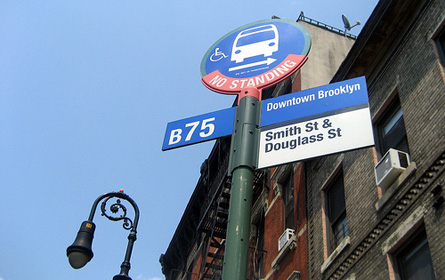
When the Metropolitan Transportation Authority cuts service, not even Brooklyn Heights and Carroll Gardens easily absorb the loss. Despite being Brooklyn's most affluent neighborhoods, these two communities cannot escape the trouble in Albany.
According to one candidate for State Assembly, corruption and mismanagement in the state capital is responsible for cuts that have reverberated in these sections of Brooklyn and throughout the city.
Engineer and former unsuccessful candidate for New York City Council Doug Biviano announced on May 12 that he would challenge Joan Millman, the assemblywoman from Brooklyn’s diverse 52nd District, in the September Democratic primary. A fourth-generation Brooklynite who studied at Cornell University, Biviano has attacked what he sees as Albany's corrupt tendencies and has accused Millman of not taking action to address the misdeeds of her colleagues in the capital.
Almost every problem, Biviano believes, has its roots in corruption and waste and the misdeed of Albany incumbents.
For her part, Millman points to a number of accomplishments including having successfully advocated to designate the Gowanus Canal as an Environmental Protection Agency superfund site, holding hearings on funding for the New York City Board of Elections to introduce new optical scan voting machines, and urging the inclusion of a new middle school in Two Trees Management's Dock Street project in Brooklyn.
Keeping Brooklyn Going
Like so many New Yorkers, the people of the district have felt the sting of MTA service cuts, which will create hardships for many, particularly the area’s elderly and disabled residents. Both Biviano and Millman have stepped up efforts to try to restore the original bus lines.
Assembly District 52, which spans from Brooklyn Heights and Vinegar Hill in the north to Gowanus in the south, lost several bus routes on June 27, including the B37, B51, B71 and B75. By many accounts, travel has become chaotic and overcrowded because there is no parallel subway for many of those bus routes.

Millman, who spent over 30 years in education as an elementary school teacher and librarian and educational consultant to former City Council President Carol Bellamy before going to Albany in 1996, began fighting the MTA over possible service cuts when the agency proposed eliminating student metro cards. Now that the students cards have been preserved, Millman has been working to recover the lost bus lines.
On June 25, Millman sent representatives to a large rally at a B71 bus stop, where constituents criticized the transportation cuts. For those who cannot access the subway, such as senior citizens and those with disabilities, buses are the only option. Moreover, the buses, claims the assemblywoman, provide "a link between communities and access to school, work, medical facilities and cultural institutions."
Millman also has sponsored legislation in the Assembly that provides alternative funding for the MTA. One such bill would allow $30 million of federal stimulus money to be included in the MTA's operating budget. Millman has also sponsored a bill to create a residential parking permit system with the fees going to support mass transit. "It is difficult to get traction for a lot of these bills," Millman said, but she added they are at least not completely dead in the water.
But Biviano has less hope for the bills. "These are just short-term fixes," he argued. He blames the MTA budget gap on "entrenched interests" in the state government and, on his web site, says, "We need to elect assembly members who have the guts to stand up to entrenched interests in Albany and force change."
Biviano's plan to fix the MTA's finances would include a low-interest federal infrastructure loan to refinance the authority's debt. Repaying the loan at a rate as low as 0.5 percent interest over 24 years to the Federal Bank for Infrastructure Modernization, which has yet to be officially created, could save the MTA $726 million each year, Biviano calculates. Additional federal stimulus funds could further serve to balance the budget.
That $726 million would allow the MTA to fix its budget in the long-term and stave off fare hikes in the near future.
Changing the Capital
Beyond transportation, Biviano's key point in his bid to represent the 52nd Assembly District is that Millman has done too little as chair of the Assembly Committee on Election Law to reform New York’s system.

Incumbent Joan Millman said she has offered solutions to the MTA's daunting budget woes.
"The election law system keeps most of Albany reelected for life," Biviano charged. This, he believes, results in complacency by legislators, which is not in the best interests of the voters. "There's no push" by the elected officials, "Biviano said. "They do the bare minimum. There's no accountability whatsoever."
Currently, 98 percent of incumbents return to the capital if they seek another election, prompting Biviano to call Millman's work with election law as an "Incumbent Protection Program." Challengers should be encouraged, Biviano said, not undermined by the system.
Millman, though, defended the election process. The ballots, she said, "are not that difficult to get on. You need 500 signatures." Regarding the high reelection rates of incumbents, she said, "Look, the voters make that decision. I pass decent legislation, so I think they're satisfied. I’m running on my record."
After petitioning for enough signatures to enable him to get on the ballot, Biviano, like other challengers, will be up against the system of member items, also known as earmarks of pork. Under this current system, Biviano said, "Money comes with the incumbent’s name on it." Groups that receive the money may therefore be reluctant to throw their support behind someone else and risk that funding. Voters also may associate the funds with whoever the incumbent is.

Challenger Doug Biviano sees the misdeed of Albany's incumbents as causing any of his districts problems.
Assemblywoman Millman, though, does not think the member items play a significant role. "This year there may not even be member-items, given the trouble with the budget," she said In past years, according to Millman, the amount was "never very large" for her district -- in the neighborhood of about $175,000, which she disbursed to various nonprofit groups.
If elected, Biviano said he would introduce ethics reform legislation to foster competitive elections by creating term limits, requiring all candidates to disclose their income, and advocating for an independent redistricting commission.
Yet Millman, who also supports changing the redistricting system, charges that Biviano lacks a concrete plan to end the Albany corruption. At an Independent Neighborhood Democrats meeting, she said, Biviano was unable to articulate a plan of action.
"What I do in Albany, is that I associate myself with the good government groups and with the legislators that try to help the most people," Millman said.
Millman has received endorsements from the Central Brooklyn Independent Democrats and Lambda Independent Democrats. As of July 11, her campaign had $154,773 on hand compared to Biviano's $5,659.
Claims of Dysfunction At City Clerk's Lobbying Bureau

Photo (cc) 2009 Noah S. Kunin
Better late than never.
The City Council and the Bloomberg administration are in the process of forming a commission to look at the city's major lobbying law revamp approved in 2006 -- two years after the group was supposed to be formed.
The five-member lobbying commission should have been empaneled in early 2008. An administration official said the passage of the city's pay to play law, restricting contributions from those that do business with the city, including lobbyists, delayed its implementation.
But as the city prepares to take another look at the law, critics contend the city clerk's lobbying bureau, which oversees lobbying disclosure and enforcement, is inundated by delay and dysfunction. Perhaps, they charge, the office just isn't up for the job.
For example, the clerk's office has discontinued its annual top 10 lobbyist report, detailing what firms brought in the most cash every year, since former clerk Victor Robles left in 2007. The current clerk, Michael McSweeney, has officially held the reins since early 2009 and prior to that was deputy clerk since 2004. (Hector Diaz immediately preceded McSweeney, but he held the post for only a year.)
Nonprofits, many registering for the first time in the last several years, claim the agency is unresponsive and disorganized. It takes weeks, if ever, to get answers from the office, leading to inaccuracies when reporting and so-called illegitimate fines, the groups argue. Just last month, the Urban Justice Center filed a lawsuit against the clerk over violations it says it doesn't deserve.
"It's just bad management," said Doug Lasdon, executive director of the Urban Justice Center. "It's just bad government."
"Whatever it is," Lasdon continued, "somebody over there is making some really bad decisions."
McSweeney declined to respond to the criticism, although he did say some of these issues will be addressed in a report to be released by his office later this year. He declined to give any more detail.
Fighting Fines
Under the 2006 law, any organization or company that is paid or expends more than $2,000 worth of time trying to sway officials must register as a lobbyist and report its activity to the city clerk every two months. They must disclose who they were targeting and what for. If they fail to do so, they can be fined thousands of dollars.
Under McSweeney, registration of lobbyists has skyrocketed. Since 2007, the number of lobbyists registered with the office has more than doubled -- from 246 to 580, according to the office's annual reports.
For veteran lobbyists who have been circulating City Hall's corridors for decades, those numbers indicate the clerk's oversight is effective.
"To point the finger and say the city clerk hasn't been doing a good job ... I wouldn't do it," said Arthur Goldstein, who has been a lobbyist in New York for 20 years. Goldstein said he always gets a timely response from staff there.
But much of the increase in registered lobbyists has come from nonprofits registering for the first time. After the 2006 law took effect, the clerk's office boosted its outreach and enforcement to register organizations and companies who engaged in lobbying, but hovered below the radar, officials said. That meant nonprofits.
Four years later, some of those affected say it isn't going very well.
"The clerk's office does not provide the best guidance for not-for-profit agencies," said Allison Sesso, deputy director of the Human Services Council. "We have had several trainings on this issue, and it's amazing to me that so many organizations are trying to comply. The guidance that is available from the city is so all over the place. [Nonprofits] are really at a loss."
The lobbying bureau has been without a department head for several months, but many of these issues, nonprofits say, go back years.
Unfamiliar with the system, some nonprofits that have tried to register their lobbying activity inadvertently filed the wrong paperwork or they claim it got tied up in the city clerk's allegedly clunky lobbying database. In the Urban Justice Center's case, the group says it filed the right information in the database, but it never reached the clerk's office.
When the center reached out to fix the problem, Lasdon said, the clerk's office refused to listen. They organization now faces a $2,700 fine, which they are challenging in court.
"I think it's a combination of mismanagement and insensitivity," said Lasdon. "Somebody running a city agency that deals with small not-for-profits has to have a better understanding of what we go through and how to work with us."
As of February 2010, the clerk has issued $314,790 in late fees, according to its annual report from March. In a statement from the city's Law Department, Corporation Counsel Michael A. Cardozo called the lawsuit "frivolous," contending the clerk's office had agreed to reconsider the fines despite the center's failure to comply with the lobbying law requirements.
The Metropolitan Council on Jewish Poverty is equally frustrated with the clerk's office. It is facing approximately $29,000 in fines (the cost of a social worker, says one staffer) for a whole year of missing reports. According to the council, it first registered at the tail end of 2008, thinking it would file reports going forward. The fines from the clerk's office are for missing reports from that year.
Public Information
Meanwhile, the success of other aspects of the 2006 lobbying law remains up for debate.
Inside the Worth Street headquarters, the city clerk was supposed to start posting violations of the law online "as soon as practicable," according to the 2006 law. The clerk said the violations are only posted once a year in the clerk's annual report.
Since being given enforcement powers, the clerk has repeatedly gone after registered lobbyists for late filings. But, critics contend, it rarely triggers its other power: tackling unregistered lobbyists. Last year was the first time the city clerk found entities, including the League of Humane Voters of New York and the Flushing Willets Point Corona Local Development Corp., guilty of unregistered lobbying, according to its annual report.
Also as part of the 2006 revision, all lobbying reporting was moved from filing cabinets to an online database. But as of Wednesday, none of the 2010 filings were posted online. A spokesperson for the Department of Information Technology and Telecommunications said it is in the process of revamping the database, and lobbyists were still in fact reporting.
McSweeney said he did not know when those filings would be available online.
Removing Responsibility
Many nonprofits said they want the clerk's office to be more understanding and more flexible in handing out late fees -- now $25 a day, no budging.
As it stands, they contend, it is far more likely to be fined for late filings than for unregistered lobbying. So, critics ask, why register at all?
But at least one good government group wants to go a step further.
In a report to the city's Charter Revision Commission released late last month, Citizens Union, the sister organization to Gotham Gazette's publisher, urged the commission to completely remove oversight from the clerk.
The report argued the Campaign Finance Board should oversee the lobbying bureau, contending it was more transparent and had the capacity to handle financial reporting. Most other cities, including Los Angeles, give lobbying oversight to their ethics bodies.
"The clerk is appointed by the council," said Dick Dadey, the executive director of Citizens Union. "The conflict arises by the clerk being appointed by the very body over which he has authority for lobbying oversight."
In an e-mailed statement, Matthew Gorton, spokesman for the Charter Revision Commission, said, "The Commission is continuing to review this and other proposals offered by the public, experts, and groups like Citizens Union."
The commission will be narrowing down its proposals to put on the November ballot in the coming weeks.
State Budget Remains in Limbo
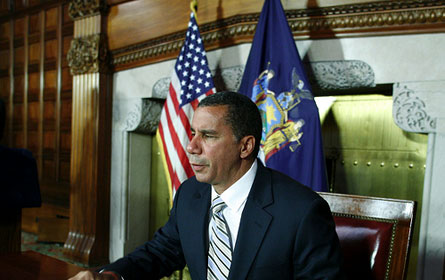
Photo (cc) 2010 Office of Gov. David Paterson
Gov. David Paterson issues the first of almost 7,000 budget vetoes on Monday.
"Is it over?"
That is the question most asked in Albany these days.
"Do we have a budget?"
That's probably the second most frequent.
The answer to those questions isn't as straightforward as anyone might hope.
It has been a back and forth couple of days in the capital as legislators and the governor battled over the budget, using obscure rules and good old-fashioned vetoesto one up each other.
Don't imagine for one second the battle is over. Bills may have been passed, but deals are still being made and the fallout for the city remains obscure.
The legislature passed its budget bills -- making the need for more emergency budget extenders obsolete. There will be no state shutdown. The legislature made a number of restorations to Gov. David Paterson's budget, but the governor has sworn to use his veto stamp almost 7,000 times to stop all increased spending. The legislature could override -- if the Senate had the votes. But Senate Republicans would need to back the Democrats in the effort, and they have told Democrats not to count on them. Meanwhile, the governor's office and the legislature continue to negotiate over the revenue package.
One Big Ugly Mess
Paterson seemed to have the legislature's number. Using emergency extenders to push through permanent cuts that legislators were determined not to make, Paterson seemed set to make his entire budget plan permanent on Monday. He had already dealt with over 70 percent of state spending in his emergency extenders. But this week, the governor's deadline backfired.
Rather than scrambling to negotiate a three-way deal, Assembly Speaker Sheldon Silver and Democratic Conference Leader John Sampson hashed out a deal between themselves -- leaving Paterson on the sidelines. Knowing that governor had some support among their members, the legislative leaders invoked a never-before-used rule that allowed them to reject Paterson's budget extenders. This time they had a funding structure of their own to pass to make sure the state government didn't shutdown.
The legislature managed to pass its budget plan on Monday after substantial effort on Sampson's part to get his conference to vote for it -- but Paterson immediately promised to veto every line of spending the legislature added to his own budget plan, and he has begun to make good on those 6,900 vetoes.
And the legislature has yet to pass its revenue plan. If and when it does, Paterson could veto that plan, sending lawmakers scrambling to reach a new revenue deal.
Legislators have started reaching out to Paterson to restart budget talks. So far, Paterson seems resistant. "I am doing the vetoes. As far as I am concerned, this budget process is over," Paterson told the Associated Press on Tuesday.
The legislature's plan was, at least in some respects, kinder to the city than the governor's. Paterson vetoed the legislature's restoration of $419 million in education aid -- $177 million of which would have gone to city schools.
"I never take any joy in vetoing education money, health care, services for the poor and the indigent," Paterson said at a press conference on Monday night. "It breaks my heart to do this. The only reason I am doing this is because I think that otherwise we are proverbially kicking the can down the road and creating a greater problem."
Education advocates and representatives from the Assembly and Senate say Paterson's veto and the cut in funding will increase class sizes and reduce educational opportunities.
"In high needs school districts across the state, this compromise budget offers a critical margin of protection to the quality of education," wrote Billy Easton of The Alliance for Quality Education. "The governor's veto, if it stands, will hurt the neediest students in the state the most."
Thanks to earlier budget extenders, New York City also is set to lose $302 million in state Aid and Incentives to Municipalities funding.
Black Box Budget?
The state is now left with a mess of a budget that even its authors don't fully grasp. Republican Sen. John DeFrancisco asked Senate Finance Chair Carl Kruger for the size of the budget -- how much spending it includes. "We do not have a number," Kruger replied. If you don't know the total amount of spending, how do you know this budget is balanced?" DeFrancisco demanded.
Eventually, Democrats handed out a memo detailing their budget deal. The total size of the budget is $135.72 billion, slightly larger than Paterson's executive budget of $135.65 billion.
Morgan Hook, spokesman for Gov. David Paterson, said the governor's office expects the budget the legislature passed is around $400 million out of balance, and that number could grow depending on how much funding the federal government delivers in its annual Medicaid payment. Washington coud very well make a devastating cut in the $1.6 billion the state received previously.
If the state does not get the money, Paterson has promised to recall legislators this fall --at the height of election season.
Raising Revenue
The legislature abandoned a number of revenue raisers in Paterson's budget, including a tax on the syrup used in sugary drinks, legalizing mixed martial arts and allowing the sale of wine in grocery stores. "We need to find other sources of revenue," said division of budget spokesman Erik Kriss. "Allowing wine in grocery stores would have given us $150 million in FY 2010-2011. They didn't do mixed martial arts, and they didn't take into account all the spending they added."
Instead, legislators reactivated a sales tax on clothing and footwear retailing for under $110. That measure is expected to raise $330 million. Legislators railed against Paterson's "sugar tax" saying it would hurt New York families by raising their grocery bills. But lawmakers were reluctant to explain how their sales tax on cheap clothing could possibly benefit hard-working New Yorkers.
Originally the legislature proposed limiting the tax deduction for charitable contributions by the wealthiest New Yorkers, allowing those who make over $10 million a year to deduct 25 percent of their charitable donations on their tax returns, down from 50 percent. The rich, especially Mayor Michael Bloomberg who makes substantial charitable donations, have assailed this measure, saying it will drive the wealthy from the state.
"If one half of one percent of the people who pay the highest taxes left this state, our income tax would be cut in half," Bloomberg said.
As a result of the backlash, the legislature amended the legislation to allow New York City to opt out of the measure, since the city has its own personal income tax.
Charitable organizations say the reduced deduction will be extremely damaging to them. "The millions that Albany hopes to gain by this tax hike won't go far to help a state whose operating deficit numbers in the billions," writes Scott Walter on philanthropydaily.com, "but those millions can mean life and death to charities and those they serve."
The bill would reduce the income tax reduction New York City residents can claim to the first $100,000 of their income. That is estimated to raise $120 million.
Video lottery terminals hours will be increased, and more of the income from them will go to the state opposed to the operators of the terminals. That measure is expected to raise $45 million.
Paterson does not have line item veto power over the revenue package and wants more revenue raisers, not fewer. Negotiations between the legislature and Paterson are reportedly ongoing and it isn't clear when the legislature will actually vote on the bill.
However, if the governor does not get what he wants he could veto the entire package and send the legislature back to the negotiating table to find more revenue sources. It would be a power play of epic proportions. "It’s a take it or leave it proposition," commented a Paterson spokesperson, who said she expected Paterson would evaluate the legislation after it passes.
"I can’t even get into the idea of vetoing that bill," said Kriss.
Silver said he doubts Paterson will veto the bill or that there will be major changes to the revenue stream. "I don't envision any great talks about changing it, as far as that goes," Silver said. "I would be surprised. The revenue bill is exactly the same as his bill that he has in that so-called emergency bill with the exception of wine in grocery stores." And yet members of the Senate Democratic conference say they are holding out on passing the revenue measure to come to terms with the Assembly on Paterson's plan to allow SUNY and CUNY to set raise their own tuition without state approval and a plan to deal with the possible lack of Federal Medicaid funding.
An Issue of Counting
Sen. Eric Schneiderman's bill that would count inmates as living in their hometowns rather than at the prison where they are incarcerated is also part of the legislature's revenue bill. It could have major consequences on the future of New York State politics.
The majority of the prisoners now counted as residing in upstate prisons are from the five boroughs. Those inmates now would be counted for redistricting purposes as living in New York City -- not upstate -- severely reducing the number of upstate districts and creating more districts in the city. Last year the legislature passed Rockefeller Drug Law reform in the budget.
In the end the budget battle is not over. There is talk that negotiations could continue after the July 4 holiday because legislators support Paterson's plan to allow SUNY and CUNY to raise their tuition every year and other measures. Lawmakers could conceivably make deals that would see a return of education funds, and Paterson could get revenue raisers he wants like the tax on sugary drinks. It's Albany, who really knows?
Unions Pick Up Tab for Council Members' Fines, Legal Bills
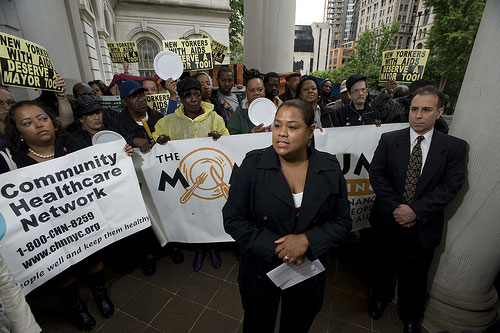
Photo 2010 William Alatriste
Annabel Palma at a rally for AIDS workers last month.
City Councilmember Annabel Palma had her payday.
Palma has used at least $64,000 from local unions to pay legal fees and fines from violations of the city's campaign finance law during her City Council campaign in 2003, according to several sources familiar with the account. The cash was funneled through a legal defense fund that is not registered with the State Board of Elections or the city Campaign Finance Board and was established by Kevin Finnegan, the current political director for 1199 SEIU, where Palma once worked as an organizer.
Palma was slapped with $30,000 in fines from the Campaign Finance Board because her 2003 campaign allegedly coordinated its activities too closely with 1199 -- the city's large and powerful healthcare workers union. The Bronx councilmember also racked up substantial legal fees during the dispute.
According to filings at the State Board of Elections, 1199 contributed a total of $51,675 to the Annabel Palma Legal Defense Fund -- making one donation in December of 2006 and another in August of 2009. The Bronx Democratic County Committee, a local UAW, United Federation of Teachers political action committee and a local International Union of Operating Engineers also contributed to the Palma defense fund.
Palma said she was not involved with setting up the fund.
"That fund was created separate and apart from my knowledge," said Palma. "It’s an independent fund. Through conversations, [it] was created by my supporters that believed that someone like myself, who came up through the ranks, needed help in paying off these fines."
The account predates Finnegan's tenure as the political director of 1199, he said, and it was established while he was still a partner at Levy Ratner -- a labor-linked law firm.
At least two other current City Council members have used independent funds to pay off fines associated with their campaign activity. According to files at the State Board of Elections, council members Joel Rivera and Elizabeth Crowley also have similar accounts.
These accounts, which are legal, are not subject to contribution limits or disclosure and may operate completely independently from the campaign finance system, despite the fact that the three officials accepted public dollars for their campaigns.
Unregistered Accounts
While state elected officials often set up private accounts or use their state campaign accounts to pay off hefty attorney fees -- recently convicted former State Sens. Joe Bruno and Efrain Gonzalez both did -- it has been completely under the radar on the city level.
Eric Friedman, the director of external affairs at the Campaign Finance Board, said candidates can use personal accounts or campaign accounts to pay fines. Friedman said the board is currently researching how other jurisdictions handle the disclosure of legal defense funds.
"We don’t currently audit candidates' personal bank accounts," said Friedman. "We don't do that nor do we think that is appropriate. The question is: Is there something that is appropriate to advance the values of our campaign finance system?"
In Palma's case, she said she had nowhere to turn when she received her hefty campaign penalty in 2007.
"I had no idea how I was going to pay this. The CFB was calling me on a daily basis just like a creditor would," said Palma. "Was the fund a blessing? I think so. If not, I would have been over $100,000 in the hole to this day."
Both Palma and Finnegan said they went to the city's Conflicts of Interest Board for a ruling on whether the Palma defense fund would represent a conflict of interest for the councilmember. They both said the board approved the use of the fund to pay Palma's fines.
Wayne Hawley of the Conflicts of Interest Board said the board has not issued a public opinion on the Palma case. Many of the board's decisions are private.
Finnegan argues legal defense funds are entirely separate from the campaign finance system, because they do not expressly advocate for the election or defeat of a candidate.
Others disagree.
"I'm stunned that this practice is permissible," said Dick Dadey, the executive director of Citizens Union, the sister organization to Gotham Gazette's publisher. "It undercuts the integrity of the campaign finance penalty system for gross violations and misuse of public funds."
When asked whether getting her campaign fines paid off by powerful city unions had the appearance of undue influence, Palma said she was not beholden to any special interest.
"As an individual, I think I'm smart enough to be able to make an independent decision separate and apart from anyone asking me to do certain things," Palma said.
An Unusual Practice?
The use of legal defense funds on the city level isn't unprecedented. Palma's current colleagues in the council have done the same thing.
According to filings at the State Board of Elections, the "Crowley for Council CFB Debt Fund" received at least $24,000 between 2006 and May 2008 -- just before the newly elected councilmember ran in a special election for an open seat in Queens. Money came from unions, including the International Union of Operating Engineers, 32BJ SEIU, 1199 and the Uniformed Fire Officers Association, among others. Crowley was slapped with $80,000 in fines by the Campaign Finance Board for fundraising irregularities associated with her 2001 campaign, which she lost to former Councilmember Dennis Gallagher.
Crowley did not return calls for comment.
Candidates cannot receive public financing unless their debts to the Campaign Finance Board are paid off.
Councilmember Joel Rivera, the council's majority leader, had to pay the Campaign Finance Board $56,245 in 2003 for failing to verify certain expenditures.
According to filings at the State Board of Elections, a fund titled "Rivera CFB Fund" received more than $19,000 from political action committees across the city, including the Uniformed Firefighters Association, 1199 and the Correction Officers' Benevolent Association, among others. The fund's address is the same as his city campaign finance account.
Yesterday Rivera said he could not recall the account, but he did say he fundraised to pay his campaign finance board fines.
"We did some fundraising, and we used the fundraising to pay off the fines," said Rivera.
The campaign finance system is complicated, he added, and candidates can get entangled in its regulations.
"There needs to be a remedy," Rivera said. "Because we're not rich."
Bill Would Change How the State Draws Districts
New York State
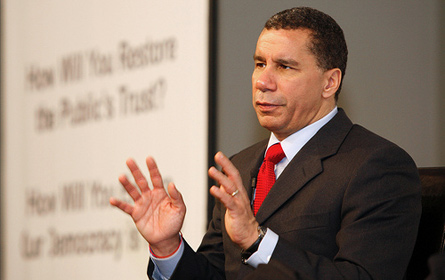
Gov. David Paterson tells a recent forum in Albany how redistricting nearly cost him his State Senate seat.
Last week, Gov. David Paterson sat at a forum on reforming Albanyand recalled how the current system of redistricting in New York personally affected him during his time in the State Senate. "It was really just the whims of senior members and antagonisms toward individuals," Paterson said, describing how he found himself representing an entirely different community after district lines were redrawn.
It was a rare glimpse into the dark realities of a system that some say has been used as a tool for legislative leaders to punish and smite their enemies and kept Republican control of the State Senate even when while Democrats enjoyed a five-to-three enrollment advantage.
Why was Paterson uprooted from the Harlem district he had long represented? Republicans wanted to oust another legislator -- Sen. Eric Schneiderman, who had earned their wrath -- and Paterson suffered the collateral damage. Both men managed to win re-election despite the maneuvering.
Every 10 years the leaders of the state legislature get to redraw the lines for the state's congressional, State Senate and Assembly districts, pushing some people into one district and some people out, thereby giving one party or another the advantage on Election Day. It is an ugly back room process based on strategy, political expedience and, sometimes, all-out political revenge. Whoever comes out with the majority in the state legislature this year will be able to control the process after the current census.
Power to Punish
Not many believe that Democrats or Republicans want to give up the power to manipulate district lines, but the discussion is actually taking place. Last week the Senate committee on investigations and government operations approved a bill sponsored by Sen. David Valesky that would take redistricting out of the legislature's hands and give it to an independent redistricting commission. But there are many obstacles in the way of the bill from becoming law, including the Democratic leaders of the legislature and Republicans who say the bill is biased towards Democrats.
The law would have prevented Republicans in 2002 from redrawing Schneiderman's district, which originally encompassed the West Side of Manhattan and parts of the Bronx, to include almost all of Washington Heights and other parts of Northern Manhattan. The shif made the district appreciably more Hispanic and prompted Guillermo Linares, who had represented Washington Heights in the City Council for 10 years, to challenge Schneiderman. "The Republican leadership did everything in their power to alter the district to get rid of me," said Schneiderman. "The alteration of that district is a perfect of example of what is wrong with partisan redistricting." Schneiderman supports Valesky's bill as well as other redistricting measures.
In the end the Republican move did not pay off. Schneiderman won his primary.
Time for Change?
On the day before Paterson told his redistricting story to Albany on the Record, a forum for state officials to talk about reform efforts, former Mayor Ed Koch, onetime city Parks Commissioner Henry Stern and Dick Dadey of the Citizens Union sat before the Senate committee on investigations and government operations and made their case for independent redistricting.(Citizens Union is the sister organization of Gotham Gazette's publisher.)
Dadey said he believes the time is right to pass such legislation, because of voter frustration over the legislature's dysfunction. "They see what is going on in Albany, and they have started to connect the dots. They are beginning to understand that issues like redistricting led to the mess we have in Albany," Dadey said.
Koch, who has been outspoken in his disdain for the current behavior of the state legislature, has already won the pledges of GOP gubernatorial candidates Rick Lazio, Steve Levy and Carl Paladino, as well a of the expected Democratic candidate, Attorney General Andrew Cuomo, to support independent redistricting should they be elected. The former mayor continued his attack on the culture of Albany during the hearing, saying that he had been convinced that simply pushing to "throw the bums out" won't fix the capital and could do some harm. There are some good legislators, he said, and independent redistricting would allow more good ones to be elected.
Sen. Ruben Diaz was incensed by Koch's comments. "This system has been used for years and years," said Diaz. “It has been a good system. But now, when blacks and Hispanics are becoming president and in power, the system is all of a sudden no good.” Koch responded that he had never supported the system and now had the time to do something about it.
After the meeting, Diaz told the Gazette that with Koch and Stern involved, he was sure race was the main motivating factor. "The Koch administration was the most corrupt administration we've had," said Diaz. "Now that we are in charge, we are all bums and he wants to throw us out."
(In 2005, New York City paid $20 million to settle a suit charging that the Department of Parks and Recreation during Stern's time as commissioner systematically discriminated against its black and Hispanic employees.)
The weekend before the senate hearing, Senate President Malcolm Smith said, "With the Democrats in control of the state Senate, we are going to draw the lines so that Republicans will be in oblivion in the state of New York for the next 20 years.” Koch had responded by calling Smith's comments "absolutely dumb."
Dadey said that Citizens Union has long backed changes in the redistricting system. "We supported reforming this since it has been in the hands of the legislature to draw the lines, regardless of who has been in power," he said.
The Proposed System
The bill Dadey supports would further require these principles to be followed in districting.
I. The most and least populous senate and assembly districts shall not exceed the mean population of districts for each house by more than 1 percent;
II. Counties and county subdivisions shall not be divided in the formation of districts, and where it is unavoidable, more populous counties or subdivisions will be divided in preference to those with smaller populations;
III. Villages shall not be divided ;
IV. Districts shall be as compact as possible; and
V. Districts shall unite communities of interest.
When these principles conflict, the one with the lower number would take precedence.
Valesky's bill would require a reapportionment commission to draw districts so that all congressional districts will have close to the same number of people as possible, and are contiguous. It would also bar the creation of any districts that "abridge or deny minority voting rights" and would require that no district favors or opposes any political party, incumbent or candidate.
Supporters of the legislation say this system will ensure non-partisan districting.
"This measure would shutter the smoke-filled rooms where legislative leaders drew legislative maps that favored incumbents, diluted the voice of certain constituencies by splitting up their communities, and calcified their hold on the levers of power," said Sen. Craig Johnson, head of the Senate committee on Investigations and Government Operations. "I believe that the voters should pick their representative, not the other way around," he concluded.
Protecting Democrats?
But Diaz is not the only one who opposes the bill. Republicans say that, the bill, as currently crafted, favors Democrats.
The measure calls for a nominations committee to select 15 registered Democrats, 15 registered Republicans and 10 people who are registered with neither major party. From that pool, legislative would choose two members each to make up an 8-person civilian reapportionment commission. Those 8 people would then appoint 3 more members, one of whom would be the chair. That group would propose district boundaries for approval by the legislature. If the legislature rejected the recommendations, public hearings would be held before maps were redrawn and submitted for legislative approval again.
Republican criticism centers around the nominations committee. Its eight members would be appointed by the presiding judge of the Court of Appeals, the attorney general, the state comptroller, the governor, the temporary president of the senate, the speaker of the assembly, the minority leader of the senate, and the minority leader of the assembly. At this time, Democrats control a majority of those positions.
Republican Sen. George Winner apologized for his "cynicism, but said he didn't quite buy that Democrats wanted to reform the process. As evidence, he pointed to the proposed structure and pointed to the way the nominations committee would be structured.
Republicans support a constitutional amendment introduced by Republican Sen. Joe Robach that would have a "districting commission" made up of five members. Four of those members would be nominated by the four heads of the legislature. The four appointed members would then themselves appoint a chair. Republicans say this would ensure a non-partisan committee.
"There are elements of the Robach bill that could strengthen the Valesky/Gianaris bill," said Dadey. But he said the Robach bill only tweaks the current system of redistricting, allowing legislative leaders to more or less retain direct control of the system. He said the Valesky bill offers a superior system to ensure independence. "It leaves the power in the hands of the legislative leaders," said Dadey.
Robach did not return requests for comment
The nuances may not matter at all. During Albany on the Record, Assembly Speaker Sheldon Silver and Senate Majority Conference Leader John Sampson were less than enthusiastic about redistricting reform.
Silver insisted that there are certain federal regulations that require district lines to be drawn in contorted ways that seemingly split communities. And other areas have so many voters registered to one party that there is no way to make the races there competitive. ""If Lassie ran on the Democratic line in my district, Lassie would win," said Silver, who represents lower Manhattan. "I’m serious. How do you make that competitive?"
In his initial comments to the reform crowd Sampson said he knew they wanted him to promise to support independent redistricting, but said he would not make that promise.
"When the bill comes to the floor, we will make a decision on that,"said Sampson.
Can the Next Attorney General Fix Albany?
Last week, federal agents and investigators from the state attorney general's office raided Senate Majority Leader Pedro Espada's nonprofit, Soundview Health Clinic. The previous day, Attorney General Andrew Cuomo announced that he was filing a civil case against Espada for pilfering $14 million from Soundview. The suit charges that Espada spent hundreds of thousands on sushi, campaign literature and family trips, and even granted himself a multi-million dollar severance package.
Espada's alleged corruption has been Albany lore for years, and he now joins a list of state politicians charged with abusing their office. The attorney general's office is currently investigating Gov. David Paterson. Meanwhile, former Senate Majority Leader Joseph Bruno waits for sentencing following his conviction on federal corruption charges. To top it off, former Assemblymember Anthony Seminario was recently sentenced to six years on federal corruption charges, and a number of legislators are under federal investigation for their relationships with nonprofits.
Susan Lerner of Common Cause said that Albany faces a "crisis of corruption." So why -- Espada’s case aside -- has the attorney general not brought more corruption cases? Why have federal authorities taken the lead? And what more can, or should, the attorney general do to police Albany?
New Yorkers will almost assuredly elect a new attorney general this year, and already at least five Democrats have lined up to seek the job. So the question of how he or she would confront official corruption has acquired new urgency.
The State’s Top Lawyer
The attorney general has enormous authority. He or she serves as the legal counsel for the state and for state employees facing lawsuits. The office protects the public good and can investigate and file lawsuits in the areas of consumer fraud, civil rights, real estate, environmental protection and internet transactions. It also collects money owed to the state.
The attorney general's office, though, does not have a license to police Albany. The attorney general cannot start a public corruption probe unless it is referred by a head of a state executive agency, the governor or the state legislative ethics board. The attorney general also has little oversight over election law violations unless the governor compels the office to investigate them. The office once had sweeping power to prosecute election law violations, but that ability was ceded to the Board of Elections in the 1970s.
As elected officials –- and politicians -- attorney generals almost inevitably will make political calculations about cases. This can cut both ways. Espada has charged Cuomo’s prosecution of him is politically motivated. Critics of former Attorney General Eliot Spitzer say he did not pursue Albany’s misdeeds as fervently as those of Wall Street because he wanted support of elected officials when he ran for governor.
During a 2004 interview with Gotham Gazette, former attorney general and current City Councilmember Oliver Koppell asked, "How can the lawyer for state officials investigate wrongdoing by those officials?"
Others, including those vying for the office, say they can.
"I don't think it matters who is prosecuting the charges as long as they are brought," said Assemblyman Richard Brodsky, a candidate for attorney general this year. Brodsky added that he thinks a number of the larger corruption cases were prosecuted by the federal authorities simply because they fell under federal jurisdiction.
According to Eric Phillips, spokesman for Nassau County District Attorney Kathleen Rice, another Democratic candidate for attorney general, federal investigations have exposed more corruption in Albany than the attorney general simply because the state official does not have the power to do so. "Despite [the attorney generals'] unique insight and statewide grasp of the landscape and the laws, the legislature has limited their scope and put them in a rather narrow place between local district attorneys and U.S. attorneys,” Phillips said.
That is not to say Cuomo has kept his hands off Albany completely. He ran as the "Sheriff of State Street," promising to deliver Albany from itself. To start out, he created a system where his office screens member items. He created Project Sunlight -- a virtual digest of member items, legislation and campaign contributions -- and has repeatedly called for the power to issue subpoenas in corruption cases.
Only recently, though, with both the Paterson and Espada investigations, has Cuomo truly bared his teeth.
A number of politicians who hope to replace Cuomo have their own ideas of how the office should lead the charge against corruption in Albany. Some Democrats say they believe Cuomo has not been as aggressive as he could have been in hunting down corruption in Albany because he wanted to maintain his political alliances. Those vying to replace Cuomo (assuming, as everyone does, that he will run for governor) have been trying to explain their vision to voters as the race begins to heat up. The first major test will be Democratic Rural Conference straw poll in Niagara Falls on Saturday.
Power to the Attorney General
At the turn of this century, Spitzer rode into town vowing to clean up Wall Street. While Washington turned a blind eye to questionable conduct in the financial industry, Spitzer, with the help of the Martin Act (a piece of New York's General Business Law written in 1921 that allows the attorney general extraordinary powers in fighting financial fraud), was able to build his Sheriff-of-Wall Street reputation.
Sean Coffey, a lawyer best known for recovering millions for the victims of the WorldCom debacle and a Democratic hopeful for attorney general, said he thinks the legislature must grant the attorney general powers equivalent to the Martin Act to police corruption in Albany. "Given the state of the state, the number one mission for the next [attorney general] has to be to fight corruption. For Wall Street we had the Martin Act, and we need that to fight corruption in Albany,” he said
Coffey said he expects that the top priority following the November election will indeed be reform. Coffey said he will work side by side with Cuomo -- if he is elected governor -- to enact reform, but says the attorney general's office will need additional power no matter who is governor. The attorney general "needs the permission of the governor or department heads to initiate an investigation," he said. "I think that has cramped Andrew Cuomo. Let’s give the [attorney general] the tools he needs.”
Phillips said that Rice, "absolutely believes that the attorney general should be unshackled when it comes to these cases, but she also thinks the next [attorney general] should find innovative ways to ensure justice and use the office's existing reach and resources. The next [attorney general] won't necessarily be able to rely on Albany for an increase in jurisdiction, so [Rice] believes the solution should include both expansion and innovation."
Another candidate, the former superintendent of the New York State Insurance Department Eric Dinallo, who is also credited with dusting off the Martin Act for Spitzer, has a six-point plan for getting the job of reform done. Most of it relies on using existing law to better regulate Albany. His major proposal calls for the governor to sign an executive order giving the attorney general jurisdiction over corruption cases involving state departments, agencies and the legislature.
“Mr. Dinallo continues to support Attorney General Andrew Cuomo's call for legislation granting the attorney general primary jurisdiction over public corruption cases, but with the stroke of a pen the governor can, and should, immediately provide the attorney general greater authority," a statement from him says.
Brodsky said he thinks focusing on prosecution will not "change the culture of Albany or affect the rate at which these crimes occur." Instead he thinks the attorney general has to lead efforts to change the culture of Albany and make fighting corruption his or her top priority.
"We need to reform the office again," said Brodsky. "Under Spitzer it went from consumer advocate to Sheriff of Wall Street; we need to reform it again to make the office the base for Albany reform efforts."
Sen. Eric Schneiderman, a Democratic attorney general candidate who has proposed numerous ethics reforms during his time in the Senate, said that he would expand the public integrity unit that looks into political corruption and put one member from it in every local attorney general's office across the state. "There are already plenty of statutes that give the office lots of authority. There are restraints on jurisdiction in certain areas, but the [attorney general] has broad authority over misuse of public funds," said Schneiderman.
Schneiderman said that he has already been leading a change in the culture of Albany, including chairing the Senate committeethat recommended the ouster of Sen. Hiram Monserrate after he was convicted of misdemeanor assault.
An Expanded Role
Representatives of good government groups say they would like to see the attorney general have more oversight. "Anything that would increase oversight is warranted until the legislature can pass ethics legislation with independent oversight," said Lerner.
Blair Horner of the New York Public Interest Research Group agrees.
"The problem is that laws of jurisdiction prevent the attorney general from looking at things unless they are invited," Horner said. The Legislative Ethics Commission, which has the job of investigating corruption, is relatively useless, he said. Any cases they investigate would be referred to the attorney general, but Horner says the office does not initiate its own investigations and rarely -- if ever -- looks into possible ethics violations. "The attorney general can't do much about it. It makes a lot of sense to me that someone besides the commission should have oversight," he said.
At the same time, some note that it's not just the powers granted to the attorney general that determine whether corruption gets prosecuted. The attitude and priorities of the office's occupant makes a difference too.
"If there is a will there is a way," said Baruch College Professor Doug Muzzio. "They've got substantial powers to investigate political corruption; we've seen that with Espada and Troopergate."
"There has been reluctance in the past for elected officials to take on the system that got them there," said Horner, adding, "I think Andrew has run as the 'Sheriff of State Street,' and he delivered."
Espada, on the other hand, has alleged that Cuomo's investigation is politically motivated -- a punishment for Espada's role in orchestrating last year's Senate “coup.”
Others have alleged that Cuomo has been eager to go after Espada because federal investigations into the abuse of nonprofits by senators are heating up, and he does not want to look as though he has been sitting on his hands. They say the Espada investigation is a perfect lead in to Cuomo's announcement that he will run for governor.
Still others worry that giving the attorney general more power could lead to political abuse. "Would the consolidation of powers or enhancement lead to an overzealous (attorney general) looking to make a name for himself?" asked Muzzio. "I don't know. It's just a question. It could provide the condition for abuse."

|
Tweet |